Alphabet

Phonics

Literacy

Math

Centers

Fine Motor
and Crafts

Teacher
Tips

Author name: sabrini025

Creating a successful autism environment in your classroom

This post may contain affiliate links which means I may receive a commission for purchases made through links. I will only recommend products that I have personally used! Learn more on my Private Policy page. Creating a successful autism environment in your classroom can be a daunting task. However, it is possible to create an atmosphere that is positive and inclusive for those with autism spectrum disorder (ASD). This blog post will provide information and guidance on how to create an autism environment in the classroom that is welcoming and supportive of students with autism. We will discuss the importance of understanding ASD, the challenges associated with it, and the strategies and approaches that can be used to ensure a successful autism environment. Understanding Autism Autism, or Autism Spectrum Disorder (ASD), is a neurodevelopmental condition that affects a person’s ability to communicate, socialize, and interact with others. Each person with autism is unique, with varying strengths and challenges. As a teacher, it’s important to understand and recognize the signs of autism so you can provide appropriate support and accommodations. Some common characteristics of autism include difficulty with social communication, repetitive behaviors, sensory sensitivities, and difficulties with transitions or changes in routine. It’s also important to recognize that every student with autism has individual strengths and interests that can be utilized to promote learning and engagement in the classroom. To better understand autism, educators can attend trainings, read books or articles, and seek out resources from reputable organizations. Understanding the nature of the condition can help inform effective teaching strategies and promote a positive learning environment for all students.   Creating a Positive Environment Creating a positive environment is crucial when it comes to supporting students with autism. A welcoming and inclusive environment can foster their development and growth. As a teacher, it’s important to understand the specific needs of your students and tailor your approach accordingly. One of the key startégies to creating a positive environment is to promote respect and understanding. This can be achieved through the use of positive language and avoiding stereotypes or assumptions about autism. Teachers should be aware of their own attitudes and behavior’s towards students with autism and take steps to create an atmosphere of acceptance. Another important startégy is to create a calm and organized physical space. This means removing any distractions or overwhelming stimuli and providing a space where students can feel safe and comfortable. Consistency in routines and schedules can also help students with autism feel more secure and in control. Teachers can also implement sensory-friendly teaching techniques such as using soft lighting, reducing noise levels, and providing opportunities for movement breaks. Providing access to sensory tools like fidget toys or weighted blankets can also be beneficial. In summary, creating a positive environment for students with autism requires a mindful and intentional approach. By using a variety of strategies like promoting respect and understanding, creating a calm physical space, and incorporating sensory-friendly teaching techniques, teachers can support their students’ growth and development.   Classroom Strategies As a teacher, it is important to implement effective teaching strategies to support students with autism in the classroom. Here are some strategies that have proven to be successful: 1. Visual Supports: Visual supports can be a powerful tool for students with autism, providing them with clear and consistent visual cues to help them understand what is expected of them. Visual aids like picture schedules, visual timers, and task analysis charts can be used to support their learning and promote independence. 2. Clear and Concise Instructions: Students with autism can struggle with processing information and can get easily overwhelmed. To support their learning, it is important to give clear and concise instructions and to break down complex tasks into smaller steps. 3. Sensory Supports: Students with autism may have sensory processing difficulties, which can cause distractions or make it difficult for them to focus. Providing sensory supports such as fidget toys, weighted vests, and noise-cancelling headphones can help students regulate their sensory needs and maintain their attention. 4. Peer Support: Students with autism benefit from social interactions, and providing opportunities for peer support can be an effective teaching strategy. Encouraging students to work in pairs or small groups, promoting positive social interactions, and teaching social skills can support their development and build their confidence. By implementing these teaching strategies, teachers can create a supportive learning environment for students with autism. Remember, every student with autism is unique, so it is important to tailor strategies to meet their individual needs. Collaboration with Parents and Caregivers In order to create a successful autism environment in your classroom, collaboration with parents and caregivers is essential. Teachers can provide valuable insight into the progress of their students and can offer strategies for parents to use at home. Parents can also provide valuable insight into their child’s strengths and areas of need. Strategies for collaboration with parents and caregivers may include regular communication through emails or parent-teacher conferences. Teachers can also provide resources and educational materials to parents to help support their child’s learning at home. Parents can also provide feedback to teachers about what strategies are working at home and what needs improvement in the classroom. Additionally, teachers can involve parents and caregivers in the development of their child’s Individualized Education Program (IEP) to ensure that goals are aligned with both home and school environments. Collaboration can also help to promote consistency in teaching strategies, as parents can reinforce strategies used in the classroom at home. Overall, collaboration with parents and caregivers is crucial in creating a positive and successful autism environment. By working together, teachers and parents can help to ensure that the needs of their students are met both in and outside of the classroom. Communication and Sensory Needs As a teacher, it’s important to understand that students with autism may have difficulty with communication and sensory processing. By creating a classroom environment that takes these needs into consideration, you can help your students feel more comfortable

Creating a successful autism environment in your classroom Read More »

10 Amazon Outfits to Keep Teachers Stylish and Comfortable During Summer

This post may contain affiliate links which means I may receive a commission for purchases made through links. I will only recommend products that I have personally used! Learn more on my Private Policy page. It’s summertime and as a teacher, you want to look your best while also staying comfortable in the classroom. With that in mind, we’ve put together 10 great outfit ideas from Amazon that are perfect for teachers during the hot summer months. Whether you’re looking for something casual, something a bit more formal, or something in between, these outfit suggestions will help you look stylish and feel comfortable all summer long. 1) Top 10 Amazon Teacher Outfits for Summer Summer is here and that means it’s time to revamp your teacher wardrobe. We’ve scoured Amazon for the best teacher outfit options that are both stylish and comfortable. Here are our top 10 picks: 1. Casual Chic for Classroom Comfort – This outfit combines a breezy top with comfortable leggings for the perfect balance of style and function. 2. Dressing Up a Basic Tee and Jeans – Elevate your everyday look by accessorizing a basic tee and jeans with a statement necklace or scarf. 3. Professional and Breathable – Stay cool and professional in a lightweight, breathable blouse and ankle-length pants. 4. Stylishly Simple in Linen – Nothing says summer like linen. Stay stylish and cool in a simple linen dress or jumpsuit. 5. Jumpsuit Ease for All Day Wear – A jumpsuit is the perfect solution for all-day comfort. Opt for a breathable fabric like cotton or linen for ultimate comfort. 6. Statement Dress with Comfort Features – Stand out in a bold pattern or color with a dress that also features comfort details like pockets and stretchy material. 7. Coordinating Colors for a Polished Look – Keep your look polished by coordinating your outfit colors. For example, pair a navy blouse with white pants for a classic summer look. 8. Accessorize to Elevate Any Outfit – Accessories are a teacher’s best friend. From statement earrings to a colorful scarf, accessorize your outfit to take it to the next level. 9. Maxi Dress Perfection – A maxi dress is both comfortable and stylish, and perfect for a summer day in the classroom. 10. Flowy Skirts for Easy Movement – Opt for a flowy skirt in a lightweight fabric like chiffon or cotton for easy movement throughout the day. In summary, the best teacher outfit for summer is one that combines style and comfort. With our top 10 Amazon picks, you’ll be able to stay cool and chic all summer long. 2) The Importance of Comfort in Summer Teacher Outfits As a teacher, finding the best teacher outfit for summer can be a challenge. The hot weather can make it difficult to feel comfortable and stylish at the same time. But it’s important to prioritize comfort in your summer teacher outfits. Why is comfort so crucial? First and foremost, being comfortable allows you to focus on your teaching rather than your outfit. You want to feel confident and put-together, but you also don’t want to be distracted by itchy fabrics or too-tight clothing. When you’re comfortable, you can fully engage with your students and create an optimal learning environment. Secondly, dressing comfortably in summer can also benefit your physical health. Breathable fabrics and loose-fitting clothing can help prevent overheating and sweating. Additionally, comfortable shoes are a must-have for teachers who spend a lot of time on their feet. Lastly, being comfortable in your best teacher outfit can improve your mental wellbeing. When you feel good in what you’re wearing, you’re more likely to feel confident and positive. This can translate into a better overall mood and more effective teaching. Overall, it’s clear that finding a comfortable teacher outfit for summer should be a top priority. But don’t worry – there are plenty of stylish and comfortable options available on Amazon that will help you look and feel your best in the classroom. 3) Outfit 1 – Casual Chic for Classroom Comfort The first outfit on our list is perfect for those hot summer days when you need to stay cool and comfortable while still looking professional. This casual chic look features a pair of lightweight cropped pants in a neutral color like khaki or navy. Pair them with a loose-fitting blouse in a fun print or bold color, and add some simple sandals or loafers to complete the look. Not only is this outfit stylish and comfortable, but it’s also functional for a busy teacher. The cropped pants allow for easy movement and ventilation, while the blouse is airy enough to keep you cool in the classroom or at recess duty. And don’t forget to accessorize with some simple jewelry or a belt to add some extra personality to your look. Overall, this casual chic outfit is a great option for those days when you want to look put-together while still staying comfortable and cool. Plus, all of the pieces can be mixed and matched with other items in your wardrobe for even more versatility. Check out Amazon for similar pieces to create your own perfect summer teacher outfit! 4) Outfit 2 – Dressing Up a Basic Tee and Jeans Sometimes all it takes is a little creativity to elevate a basic tee and jeans outfit into a stylish and professional teacher look. This outfit is perfect for those days when you want to be comfortable but still put together. Start with a classic white tee, preferably made of a breathable material like cotton. Pair it with a high-waisted, dark-wash denim jean that fits well and is comfortable enough to wear all day. You can choose to cuff the jeans for a more relaxed look, or leave them down for a polished appearance. To add a pop of color, slip on a lightweight cardigan in a bright hue like coral or teal. Not only will it add some interest to your outfit, but it will

10 Amazon Outfits to Keep Teachers Stylish and Comfortable During Summer Read More »

Soutenir le développement des compétences en littératie : conseils aux enseignants de la maternelle

Ce message peut contenir des liens d’affiliation, ce qui signifie que je peux recevoir une commission pour les achats effectués via des liens. Je ne recommanderai que des produits que j’ai personnellement utilisés ! En savoir plus sur ma page Politique de confidentialité. Les enseignants de la maternelle ont une occasion incroyable d’aider à façonner les jeunes esprits. Soutenir le développement des compétences en littératie est essentiel à l’éducation de la petite enfance, et les enseignants peuvent faire leur part en mettant en œuvre quelques stratégies simples dans leurs salles de classe. Dans cet article de blog, nous fournirons plus de 8 façons dont les enseignants de la maternelle peuvent soutenir le développement des compétences en littératie chez leurs élèves. L’importance du développement des compétences en littératie à la maternelle Les enseignants de maternelle apprennent très tôt dans leur formation à quel point le développement des compétences en littératie est crucial pour les jeunes apprenants. En fait, il jette les bases de leur future réussite scolaire. Les compétences en littératie englobent la lecture, l’écriture, la parole et l’écoute, qui sont toutes des composantes essentielles de la capacité d’un enfant à communiquer efficacement et à comprendre le monde qui l’entoure.Dans les premières années, les cerveaux des enfants sont comme des éponges, absorbant de nouvelles informations et expériences à un rythme rapide. En se concentrant sur le développement des compétences en littératie à la maternelle, les enseignants contribuent à établir de solides connexions neuronales dans le cerveau de leurs élèves, les préparant ainsi pour toute une vie d’apprentissage.Non seulement le développement des compétences en littératie soutient la réussite scolaire, mais il favorise également la croissance sociale et émotionnelle. Grâce à la lecture et à l’écriture, les enfants de la maternelle peuvent s’exprimer, explorer leurs intérêts et s’engager dans des conversations significatives avec leurs pairs et leurs enseignants. De plus, les compétences en littératie aident les enfants à développer la pensée critique, la résolution de problèmes et la créativité, des compétences qui sont essentielles pour réussir sur le marché du travail du 21e siècle.La maternelle est une période critique pour jeter les bases du développement des compétences en littératie, et c’est grâce aux efforts dévoués des élèves-enseignants que les jeunes apprenants reçoivent les outils dont ils ont besoin pour devenir des lecteurs compétents, des écrivains confiants et des communicateurs efficaces. Les enseignants de la maternelle apprennent diverses stratégies pour soutenir le développement des compétences en littératie chez leurs jeunes apprenants. Ils découvrent que la création d’un environnement de classe riche en littératie est essentielle pour favoriser l’amour de la lecture et de l’écriture. Ceci peut être réalisé en fournissant une grande variété de livres et de ressources qui répondent à différents intérêts et niveaux de lecture.De plus, les enfants de la maternelle s’épanouissent dans la routine, donc l’intégration de séances quotidiennes de lecture à haute voix dans l’horaire est un moyen puissant de les exposer à un large éventail de vocabulaire, de structures linguistiques et de scénarios. Grâce à ces séances, les élèves-enseignants peuvent modéliser une lecture fluide et encourager une participation active en posant des questions et en établissant des liens.De plus, la mise en place de séances de lecture guidée permet aux élèves-enseignants de fournir un enseignement ciblé à de petits groupes d’élèves en fonction de leurs capacités de lecture. En utilisant des textes nivelés et en incorporant des activités d’alphabétisation significatives, les enfants de la maternelle peuvent pratiquer et renforcer leurs compétences en lecture dans un environnement favorable et échafaudé.Encourager la lecture indépendante est tout aussi important. Les enseignants peuvent créer un coin lecture confortable dans la salle de classe et fournir une gamme de livres adaptés à l’âge que les élèves peuvent explorer par eux-mêmes. Il est également crucial de donner aux enfants de maternelle accès à une bibliothèque de classe, où ils peuvent choisir librement les livres qui les intéressent.En cette ère numérique, la technologie peut également améliorer le développement des compétences en littératie. Les enseignants peuvent utiliser des applications de lecture interactives, des sites Web éducatifs et des outils de narration numérique pour engager et motiver les jeunes apprenants.De plus, les jardins d’enfants sont des salles de classe diversifiées, avec des élèves d’horizons et de capacités variés. Les enseignants doivent mettre en œuvre des techniques d’enseignement différenciées pour répondre aux besoins de tous les apprenants. Cela peut inclure l’adaptation du matériel, la fourniture d’un soutien supplémentaire ou l’offre d’activités d’enrichissement pour défier les apprenants avancés.Enfin, la collaboration avec les familles et les partenaires communautaires est essentielle pour soutenir le développement des compétences en littératie. Les enseignants peuvent impliquer les parents dans le parcours d’alphabétisation de leurs enfants en leur fournissant du matériel de lecture à emporter, en organisant des événements axés sur l’alphabétisation et en s’engageant dans une communication ouverte sur les progrès des élèves.   Stratégies pour créer un environnement de classe riche en littératie En tant qu’enseignant de maternelle, l’un de vos principaux objectifs est de créer un environnement riche en littératie pour vos élèves. Le développement des compétences en littératie est essentiel à cet âge, car il jette les bases de la réussite scolaire et de l’apprentissage continu d’un enfant. Pour atteindre cet objectif, voici quelques stratégies que vous pouvez utiliser pour créer un environnement de classe riche en littératie  1. Fournir un accès aux livres : Remplissez votre classe d’une grande variété de livres à différents niveaux de lecture. Assurez-vous que les livres reflètent la diversité des cultures et des intérêts de vos élèves.2. Aménagez des centres de lecture : Aménagez des coins de lecture confortables dans votre salle de classe avec des oreillers et des sièges confortables. Encouragez les élèves à explorer différents genres et styles de littérature.3. Utilisez les centres d’apprentissage interactifs : les centres d’apprentissage interactifs sont un excellent moyen de faire participer les élèves à la lecture et à l’écriture. Utilisez ces centres pour renforcer les compétences en littératie, telles que la phonétique et la reconnaissance des mots.4. Incorporez des opportunités d’écriture : Fournissez du matériel d’écriture et des opportunités à vos élèves de mettre en pratique leurs compétences en écriture. Encouragez-les à écrire leurs propres histoires, lettres et poèmes.5. Affichez les

Soutenir le développement des compétences en littératie : conseils aux enseignants de la maternelle Read More »

Supporting Literacy Skills Development: Advice for Kindergarten Teachers

This post may contain affiliate links which means I may receive a commission for purchases made through links. I will only recommend products that I have personally used! Learn more on my Private Policy page.   Kindergarten  teachers have an incredible opportunity to help shape young minds. Supporting the development of literacy skills is essential to early childhood education, and  teachers can do their part by implementing a few simple strategies in their classrooms. In this blog post, we’ll provide 8+ ways that Kindergarten  teachers can support literacy skills development in their students. The Importance of Literacy Skills Development in Kindergarten Kindergarten teachers learn early on in their training just how crucial literacy skills development is for young learners. In fact, it lays the foundation for their future academic success. Literacy skills encompass reading, writing, speaking, and listening, all of which are vital components of a child’s ability to communicate effectively and understand the world around them. In the early years, children’s brains are like sponges, absorbing new information and experiences at a rapid rate. By focusing on literacy skills development in kindergarten,  teachers are helping to build strong neural connections in their students’ brains, setting them up for a lifetime of learning. Not only does literacy skills development support academic achievement, but it also fosters social and emotional growth. Through reading and writing, kindergartners are able to express themselves, explore their interests, and engage in meaningful conversations with their peers and teachers. Additionally, literacy skills help children develop critical thinking, problem-solving, and creativity, skills that are essential for success in the 21st-century workforce. Kindergarten is a critical time for laying the foundation of literacy skills development, and it is through the dedicated efforts of student teachers that young learners are given the tools they need to become proficient readers, confident writers, and effective communicators. Kindergarten teachers learn various strategies to support literacy skills development in their young learners. They discover that creating a literacy-rich classroom environment is essential for fostering a love for reading and writing. This can be achieved through providing a wide variety of books and resources that cater to different interests and reading levels. Additionally, kindergartners thrive on routine, so incorporating daily read-aloud sessions into the schedule is a powerful way to expose them to a wide range of vocabulary, language structures, and storylines. Through these sessions, student teachers can model fluent reading and encourage active participation by asking questions and making connections. Furthermore, implementing guided reading sessions allows student teachers to provide targeted instruction to small groups of students based on their reading abilities. By utilizing leveled texts and incorporating meaningful literacy activities, kindergartners can practice and strengthen their reading skills in a supportive and scaffolded environment. Encouraging independent reading is equally important. Student teachers can create a cozy reading corner in the classroom and provide a range of age-appropriate books for students to explore on their own. It is also crucial to give kindergartners access to a classroom library, where they can freely choose books that interest them. In this digital age, technology can also enhance literacy skills development. Teachers can use interactive reading apps, educational websites, and digital storytelling tools to engage and motivate young learners. Moreover, kindergartens are diverse classrooms, with students from various backgrounds and abilities.  Teachers must implement differentiated instruction techniques to meet the needs of all learners. This may include adapting materials, providing additional support, or offering enrichment activities to challenge advanced learners. Finally, collaboration with families and community partners is vital for supporting literacy skills development.  Teachers can involve parents in their children’s literacy journey by providing take-home reading materials, hosting literacy-focused events, and engaging in open communication about students’ progress. Strategies for Creating a Literacy-Rich Classroom Environment As a kindergarten  teacher, one of your primary goals is to create a literacy-rich environment for your students. Literacy skills development is essential at this age, as it lays the foundation for a child’s academic success and life-long learning. To achieve this goal, here are some strategies you can use to create a literacy-rich classroom environment: 1. Provide Access to Books: Stock your classroom with a wide variety of books at various reading levels. Make sure that the books reflect the diversity of your students’ cultures and interests. 2. Set up Reading Centers: Set up cozy reading nooks in your classroom with pillows and comfortable seating. Encourage students to explore different genres and styles of literature. 3. Use Interactive Learning Centers: Interactive learning centers are an excellent way to engage students in reading and writing. Use these centers to reinforce literacy skills, such as phonics and word recognition. 4. Incorporate Writing Opportunities: Provide writing materials and opportunities for your students to practice their writing skills. Encourage them to write their own stories, letters, and poems. 5. Display Student Work: Celebrate student achievement by displaying their writing and artwork around the classroom. This reinforces the importance of literacy skills development and encourages students to continue their progress. 6. Create a Literacy Calendar: A literacy calendar is a fun way to incorporate reading and writing activities into your daily routine. You can plan special activities for holidays or themed weeks. 7. Model Good Reading Habits: Model good reading habits for your students by reading aloud to them regularly. Encourage them to ask questions and make connections to their own experiences. 8. Use Props and Manipulatives: Props and manipulatives, such as puppets and alphabet blocks, are a great way to engage young learners in literacy activities. Use these tools to make learning fun and interactive. Incorporating Reading Aloud into Daily Routine Kindergarten teachers learn that reading aloud is a powerful tool for literacy skills development. Regular reading aloud sessions help students build vocabulary, comprehension skills, and an appreciation for different types of literature. To incorporate reading aloud into the daily routine,  teachers can start by choosing high-quality books that are developmentally appropriate and engaging for their students. Reading aloud should be a joyful experience, so it is important to select books that

Supporting Literacy Skills Development: Advice for Kindergarten Teachers Read More »

Teaching Phonics to Kids: What Age is Ideal?

This post may contain affiliate links which means I may receive a commission for purchases made through links. I will only recommend products that I have personally used! Learn more on my Private Policy page.   When it comes to teaching phonics to kids, a question that many parents and educators have is: What age should phonics be taught? Knowing the ideal age to start teaching phonics to children can help ensure that they receive the best education possible. In this blog post, we will explore the answer to this question and discuss how to incorporate phonics into a child’s learning environment. What are Phonics and Why are They Important? Phonics is a method of teaching reading and writing that focuses on the relationship between sounds and letters. It involves teaching students how to recognize and decode letters and letter combinations in order to read words accurately and fluently. Phonics instruction has been shown to be an effective way of helping students become proficient readers. According to a report from the National Reading Panel, students who receive phonics instruction tend to make faster progress in reading than those who don’t. One of the reasons why phonics is so important is that it helps students to develop strong foundational reading skills. By learning how to decode words phonetically, students are able to read unfamiliar words on their own, without relying on memorization. This is a crucial skill that can help students throughout their academic career, as well as in their personal and professional lives. Another reason why phonics is important is that it helps to promote literacy and language development. By learning the sounds that letters and letter combinations make, students are able to develop a deeper understanding of how language works, which can in turn help them to communicate more effectively. Overall, phonics is an essential component of literacy instruction. Whether you’re a student, a teacher, or a parent, it’s important to recognize the value of phonics in helping children learn to read and write. Research-Based Recommendations on When to Teach Phonics There have been various studies conducted on the optimal age to introduce phonics to young children. According to the National Reading Panel, it is recommended to teach phonics to students at the beginning of their learning to read journey, typically around the age of five or six. Student teachers who are preparing to teach in a classroom setting are also encouraged to teach phonics at an early age to ensure that their students develop a strong foundation in reading and writing skills. The reason behind teaching phonics at such a young age is that children’s brains are more receptive to learning new concepts during their early years. By introducing phonics at a young age, students are able to build their understanding of the sounds and symbols used in the English language, leading to more effective and efficient reading and writing skills later on. Furthermore, research shows that children who are taught phonics at a young age are more likely to have better literacy outcomes than those who are not. Early exposure to phonics has been shown to improve children’s reading accuracy, comprehension, and overall confidence in their reading abilities. However, it is important to note that every child is different, and the decision of when to introduce phonics should be based on their individual readiness and development. While the majority of children may be ready to learn phonics at the age of five or six, some may not be ready until a bit later. Therefore, it is essential to take into account various factors before making a decision on when to introduce phonics. In the next section, we’ll look at some of the factors to consider when deciding if your child is ready to learn phonics. Factors to Consider in Deciding When to Teach Phonics As a parent, deciding when to introduce phonics to your child can be a difficult task. There are a few factors you may want to consider to help make this decision. Firstly, every student is unique, so it is important to keep in mind that some children may be ready to learn phonics earlier or later than others. Additionally, teachers and educational professionals may have varying opinions on when to start phonics instruction. Secondly, it is essential to assess your child’s reading and writing skills. If they struggle with letter recognition or basic sounds, it may be best to wait a bit before introducing phonics. However, if they are showing a keen interest in books and enjoy reading simple words, then phonics instruction may be a good fit. Finally, it is also worth noting that phonics is just one component of reading instruction. Some students may benefit from a multi-sensory approach to learning, including sight-word recognition and context clues. By taking into consideration your child’s unique abilities and strengths, along with the input of teachers and educational professionals, you can determine the best time to begin phonics instruction. Signs Your Child is Ready to Learn Phonics Phonics is a crucial part of early education that teaches children the sound-symbol relationships necessary for reading and writing. But how do you know when your child is ready to learn phonics? Here are some signs to look for: 1. Your child knows the alphabet: Phonics instruction builds on a child’s knowledge of the alphabet. If your child can identify letters and their sounds, they’re ready to learn phonics. 2. Your child is interested in reading: Children who show an interest in books and reading are usually ready for phonics instruction. They may even start to ask questions about how words are formed and what they mean. 3. Your child can blend sounds: Phonics instruction involves blending individual sounds together to form words. If your child can already do this, they’re ready to move on to more complex phonetic concepts. 4. Your child can rhyme: Rhyming is an essential phonics skill. If your child can identify words that rhyme or make up their own rhymes, they

Teaching Phonics to Kids: What Age is Ideal? Read More »

Everything You Need to Know About Phonics for Kindergarten

This post may contain affiliate links which means I may receive a commission for purchases made through links. I will only recommend products that I have personally used! Learn more on my Private Policy page. Have you ever wondered what is phonics for kindergarten? Phonics is an important building block for early literacy development. It involves recognizing the sounds of spoken language and learning how to link them to written letters. Phonics helps children learn to read and write words by connecting the sound of each letter to a specific letter or letter group. In this blog post, we will discuss everything you need to know about phonics for kindergarten, including the benefits, tips, and strategies for teaching it. What is Phonics for Kindergarten? Phonics is a method of teaching children to read and write by helping them understand the relationship between sounds and written language. In Kindergarten, phonics instruction focuses on introducing young students to the basic sounds and patterns of letters, allowing them to develop a foundation for future literacy skills. Teachers use a variety of methods and strategies to introduce phonics concepts to students, including songs, games, and worksheets. By learning phonics, Kindergarten students can begin to develop the essential literacy skills they need for academic success in the years ahead. The ultimate goal of phonics instruction for Kindergarten students is to help them learn to read and write with ease. Through phonics, students learn to decode words, break them down into syllables and sounds, and understand the patterns and rules of written language. The key is to provide a solid foundation in phonics at an early age, so that students can build on their literacy skills as they progress through their education. To achieve this goal, teachers must create a fun and engaging learning environment that helps students stay focused and motivated. Many teachers use hands-on activities, such as letter-sound matching games and interactive whiteboards, to help students engage with phonics concepts. They also use visual aids like flashcards and posters to reinforce learning and provide students with a visual reference. Phonics instruction for Kindergarten students should be carefully planned and structured to ensure that it meets the unique needs of each individual learner. Teachers must be prepared to modify their teaching methods to accommodate different learning styles, as some students may learn best through visual aids, while others may learn better through auditory methods. Ultimately, phonics instruction for Kindergarten students should be a fun and engaging process that encourages exploration, experimentation, and discovery. By fostering a love of learning and a passion for language, teachers can help students develop a strong foundation in phonics and set them up for future success in their academic careers. The Importance of Phonics in Early Education Phonics is an essential component of early education, especially in kindergarten. It teaches students how to read and write by focusing on the relationship between sounds and letters. By learning phonics, students can easily decode words and comprehend text, making it an essential tool for future academic success. Teachers play a vital role in teaching phonics to kindergarteners. They help students identify sounds, letters, and word patterns through engaging and interactive activities. Moreover, teachers develop lesson plans that incorporate phonics strategies to build a strong foundation in literacy for their students. Without phonics, learning to read and write would be a daunting task for kindergarteners. It is crucial to introduce phonics at an early age so that students can develop critical skills that will help them succeed in later years of schooling. Through phonics instruction, students can also expand their vocabulary and improve their spelling and grammar, further enhancing their reading and writing abilities. Teachers can also use phonics to promote active learning in students. For example, they can encourage students to identify words with similar sounds or letter patterns, increasing their engagement with the lesson. Moreover, teachers can personalize their teaching strategies to cater to students’ individual learning styles, helping them learn phonics in a way that best suits them. The benefits of phonics instruction extend beyond the classroom, too. Students who learn phonics at a young age are more likely to enjoy reading and writing, leading to improved communication skills and a stronger sense of confidence in their abilities. Additionally, students learning phonics in kindergarten are more likely to excel academically as they move through school and into higher education. Overall, phonics is an essential tool in early education, particularly in kindergarten. By focusing on the relationship between sounds and letters, students can develop critical skills that will aid them in all aspects of their academic and personal lives. With the help of teachers, phonics instruction can be engaging, interactive, and fun for students, paving the way for a lifetime of learning. How to Teach Phonics to Kindergarteners Teaching phonics to kindergarteners is an important task for teachers and parents alike. It lays the foundation for reading and writing skills that they will use throughout their academic journey. Here are some tips for effectively teaching phonics to your young students: 1. Start with the basics Before you can dive into more complex phonics rules, it’s important to ensure that your students have a solid grasp of the basics. Teach them the individual letter sounds and help them practice recognizing them in words. 2. Use multi-sensory techniques Young children learn best through hands-on experiences that engage all of their senses. Try incorporating different sensory activities into your phonics lessons, such as using tactile materials to create letters or words, singing songs that emphasize certain sounds, or playing games that involve movement. 3. Make it fun Phonics lessons can easily become tedious and boring for kindergarteners, so it’s important to keep things interesting and engaging. Try to incorporate games, songs, and interactive activities into your lessons to keep your students motivated and excited about learning. 4. Practice, practice, practice Consistent practice is key to reinforcing phonics skills in young learners. Provide your students with ample opportunities to practice identifying letter sounds and

Everything You Need to Know About Phonics for Kindergarten Read More »

Des moyens efficaces pour gérer le comportement des élèves en classe avant qu’il ne dégénère

Ce message peut contenir des liens d’affiliation, ce qui signifie que je peux recevoir une commission pour les achats effectués via des liens. Je ne recommanderai que des produits que j’ai personnellement utilisés ! En savoir plus sur ma page Politique de confidentialité. Chaque enseignant est confronté au défi de faire face au comportement des élèves en classe à un moment donné de sa carrière. Qu’il s’agisse d’un élève qui ne respecte pas le droit de la parole, qui est perturbateur ou qui refuse de suivre les instructions, la gestion des comportements  peut être l’un des aspects les plus difficiles de l’enseignement. Cependant, il est possible d’étouffer un mauvais comportement dans l’œuf et de l’empêcher de s’aggraver. Dans cet article de blog, nous examinerons quelques stratégies efficaces pour aider les enseignants à gérer le comportement des élèves en classe avant qu’il ne devienne incontrôlable. Reconnaître les signes d’un comportement difficile Faire face à un comportement difficile en classe peut être un défi, même pour les éducateurs les plus expérimentés. Mais avant de pouvoir aborder ces comportements, nous devons d’abord les reconnaître. Divers signes peuvent indiquer un comportement difficile en classe. Ces signes comprennent la perturbation, l’agressivité, le défi, le désengagement et l’inattention. Un comportement perturbateur comprend des actes comme parler lorsque ce n’est pas son tour, faire du bruit inutilement et s’engager dans des activités qui distraient les autres. L’agression peut impliquer des attaques physiques ou verbales contre des pairs ou des membres du personnel. La défiance implique souvent de désobéir aux règles de la classe ou de ne pas tenir compte des instructions données par l’enseignant. Le désengagement peut être observé par un manque d’intérêt ou de participation aux activités en classe, tandis que l’inattention implique l’incapacité de se concentrer ou de se concentrer sur les tâches assignées. Lorsque nous remarquons ces signes de comportement difficile en classe, il est important d’agir rapidement pour éviter que la situation ne dégénère. Cependant, cela nécessite une compréhension de la cause première du comportement, dont nous parlerons dans la section suivante. Comprendre la cause profonde du comportement Lorsqu’il s’agit d’un comportement difficile en classe, il est important de regarder au-delà du niveau superficiel du comportement et d’essayer de comprendre sa cause profonde. Cela peut impliquer d’examiner les antécédents de l’élève, sa vie familiale et ses expériences personnelles pour mieux comprendre pourquoi il peut agir de certaines manières. Par exemple, un élève qui perturbe constamment en salle de classe peut être aux prises avec un trouble d’apprentissage ou un trouble déficitaire de l’attention. Alternativement, un élève qui est constamment provocant ou agressif peut être confronté à une dynamique familiale difficile ou à une expérience passée traumatisante. En comprenant la cause profonde du comportement d’un élève, les enseignants peuvent développer des interventions ciblées et des stratégies de soutien adaptées à leurs besoins spécifiques. Cela peut impliquer de travailler avec des conseillers scolaires, des travailleurs sociaux ou d’autres professionnels pour élaborer un plan complet pour résoudre les problèmes sous-jacents et promouvoir un changement de comportement positif. De plus, comprendre la cause profonde du comportement d’un élève peut aider les enseignants à réagir avec plus d’empathie et de compassion, ce qui peut à son tour favoriser de meilleures relations avec leurs élèves et créer un environnement de classe plus positif et favorable. En fin de compte, lorsqu’il s’agit d’un comportement difficile en classe, il est important d’aborder chaque élève en tant qu’individu et de s’efforcer de comprendre les facteurs sous-jacents qui peuvent contribuer à son comportement. Avec de la patience, de la compassion et les bonnes stratégies de soutien en place, les enseignants peuvent aider même les élèves les plus difficiles à réussir et à s’épanouir en classe. Établir des règles et des attentes claires en classe L’un des moyens les plus importants d’empêcher que les comportements difficiles ne dégénèrent en classe consiste à établir des règles et des attentes claires. Cela aide non seulement les élèves à comprendre ce qu’on attend d’eux, mais fournit également un cadre pour la gestion du comportement. Lors de la création des règles et des attentes de la classe, il est important d’impliquer les élèves dans le processus. Demandez leur avis et leurs commentaires pour vous assurer qu’ils se sentent propriétaires des règles. Cela peut contribuer à accroître l’adhésion et la conformité. Les règles de votre classe doivent être claires et précises, avec des conséquences clairement énoncées en cas d’infraction. Assurez-vous d’expliquer pourquoi chaque règle est importante et comment elle se rapporte à la création d’un environnement d’apprentissage sûr et positif. En plus des règles, il est également important d’établir des attentes claires en matière de comportement. Par exemple, vous pouvez vous attendre à ce que les élèves écoutent les autres avec respect, demandent la permission avant de quitter la salle ou rendent leurs devoirs à temps. Encore une fois, soyez clair et précis et fournissez un renforcement positif lorsque les élèves atteignent ou dépassent les attentes. Il est important de noter que les règles et les attentes doivent être cohérentes dans toute la classe et que vous devez tenir tous les élèves responsables de leur respect. Cette cohérence peut aider à prévenir les malentendus ou le ressentiment des élèves qui se sentent traités injustement. Dans l’ensemble, l’établissement de règles et d’attentes claires en classe est une étape fondamentale dans la prévention des comportements difficiles. En fournissant une structure et un cadre pour la gestion du comportement, vous pouvez aider les élèves à comprendre ce que l’on attend d’eux et empêcher que de petits problèmes ne se transforment en problèmes plus importants. Utiliser des techniques de renforcement positif En plus d’établir des règles et des attentes claires, il est également important de se concentrer sur les techniques de renforcement positif pour encourager un comportement positif et décourager les comportements difficiles. Le renforcement positif consiste à récompenser un bon comportement par des éloges, des encouragements et d’autres incitations pour aider à motiver les élèves à continuer à se comporter de manière positive. Voici quelques techniques de renforcement positif à considérer : Louange verbale : C’est la forme la plus simple de renforcement positif, mais aussi l’une des plus efficaces. Lorsqu’un

Des moyens efficaces pour gérer le comportement des élèves en classe avant qu’il ne dégénère Read More »

Effective ways to diffuse student classroom behavior before it escalates

This post may contain affiliate links which means I may receive a commission for purchases made through links. I will only recommend products that I have personally used! Learn more on my Private Policy page.     Every teacher faces the challenge of having to deal with student classroom behavior at some point in their career. Whether it’s a student talking out of turn, being disruptive, or refusing to follow instructions, managing difficult behavior can be one of the most challenging aspects of teaching. However, it is possible to nip bad behavior in the bud and prevent it from escalating. In this blog post, we’ll look at some effective strategies to help teachers diffuse student classroom behavior before it has a chance to get out of hand.   Recognizing the Signs of Difficult Behavior   Dealing with difficult behavior in the classroom can be a challenge for even the most experienced educators. But before we can address these behaviors, we must first recognize them. There are various signs that may indicate difficult behavior in the classroom. These signs include disruption, aggression, defiance, disengagement, and inattention.  Disruptive behavior includes things like talking out of turn, making unnecessary noise, and engaging in activities that distract others. Aggression may involve physical or verbal attacks on peers or staff members. Defiance often involves disobeying classroom rules or disregarding instructions given by the teacher. Disengagement can be observed through a lack of interest or participation in classroom activities, while inattention involves the inability to focus or concentrate on assigned tasks.  When we notice these signs of difficult behavior in the classroom, it is important to act swiftly to prevent the situation from escalating. However, this requires an understanding of the root cause of the behavior, which we will discuss in the next section.     Understanding the Root Cause of the Behavior   When dealing with difficult behavior in the classroom, it is important to look beyond the surface level of the behavior and try to understand its root cause. This may involve examining the student’s background, home life, and personal experiences to gain a better understanding of why they may be acting out in certain ways. For example, a student who consistently disrupts class may be struggling with a learning disability or attention deficit disorder. Alternatively, a student who is consistently defiant or aggressive may be dealing with difficult family dynamics or a traumatic past experience. By understanding the root cause of a student’s behavior, teachers can develop targeted interventions and support strategies that are tailored to their specific needs. This may involve working with school counselors, social workers, or other professionals to develop a comprehensive plan for addressing the underlying issues and promoting positive behavioral change. In addition, understanding the root cause of a student’s behavior can help teachers to respond in a more empathetic and compassionate manner, which can in turn foster better relationships with their students and create a more positive and supportive classroom environment. Ultimately, when dealing with difficult behavior in the classroom, it is important to approach each student as an individual and work to understand the underlying factors that may be contributing to their behavior. With patience, compassion, and the right support strategies in place, teachers can help even the most challenging students to succeed and thrive in the classroom.     Establishing Clear Classroom Rules and Expectations   One of the most important ways to prevent difficult behavior from escalating in the classroom is by establishing clear rules and expectations. This not only helps students understand what is expected of them but also provides a framework for behavior management. When creating classroom rules and expectations, it’s important to involve students in the process. Ask for their input and feedback to ensure that they feel ownership over the rules. This can help to increase buy-in and compliance. Your classroom rules should be clear and specific, with consequences clearly stated for breaking them. Be sure to explain why each rule is important and how it relates to creating a safe and positive learning environment. In addition to rules, it’s also important to establish clear expectations for behavior. For example, you may expect students to listen respectfully to others, ask for permission before leaving the room, or turn in assignments on time. Again, be clear and specific, and provide positive reinforcement when students meet or exceed expectations. It’s important to note that rules and expectations should be consistent across the classroom, and you should hold all students accountable for following them. This consistency can help to prevent misunderstandings or resentment from students who feel that they are being treated unfairly. Overall, establishing clear classroom rules and expectations is a foundational step in preventing difficult behavior. By providing a structure and framework for behavior management, you can help students understand what is expected of them and prevent small issues from turning into larger ones.     Using Positive Reinforcement Techniques   In addition to setting clear rules and expectations, it’s also important to focus on positive reinforcement techniques to encourage positive behavior and discourage difficult behavior. Positive reinforcement involves rewarding good behavior with praise, encouragement, and other incentives to help motivate students to continue behaving positively. Here are a few positive reinforcement techniques to consider: Verbal Praise: This is the simplest form of positive reinforcement, but also one of the most effective. When a student demonstrates positive behavior, provide verbal praise by acknowledging their good work. For example, “Great job paying attention today, John!” or “Thank you for being such a good listener, Jane.” Positive Notes: Sending positive notes home to parents or guardians can be an effective way to reinforce good behavior and show students that their efforts are being noticed. Notes can be sent for a range of reasons, such as demonstrating kindness, being a good listener, or working hard on an assignment. Token Economies: Token economies involve providing students with tokens or other small rewards when they exhibit positive behavior. Tokens can be collected and exchanged for

Effective ways to diffuse student classroom behavior before it escalates Read More »

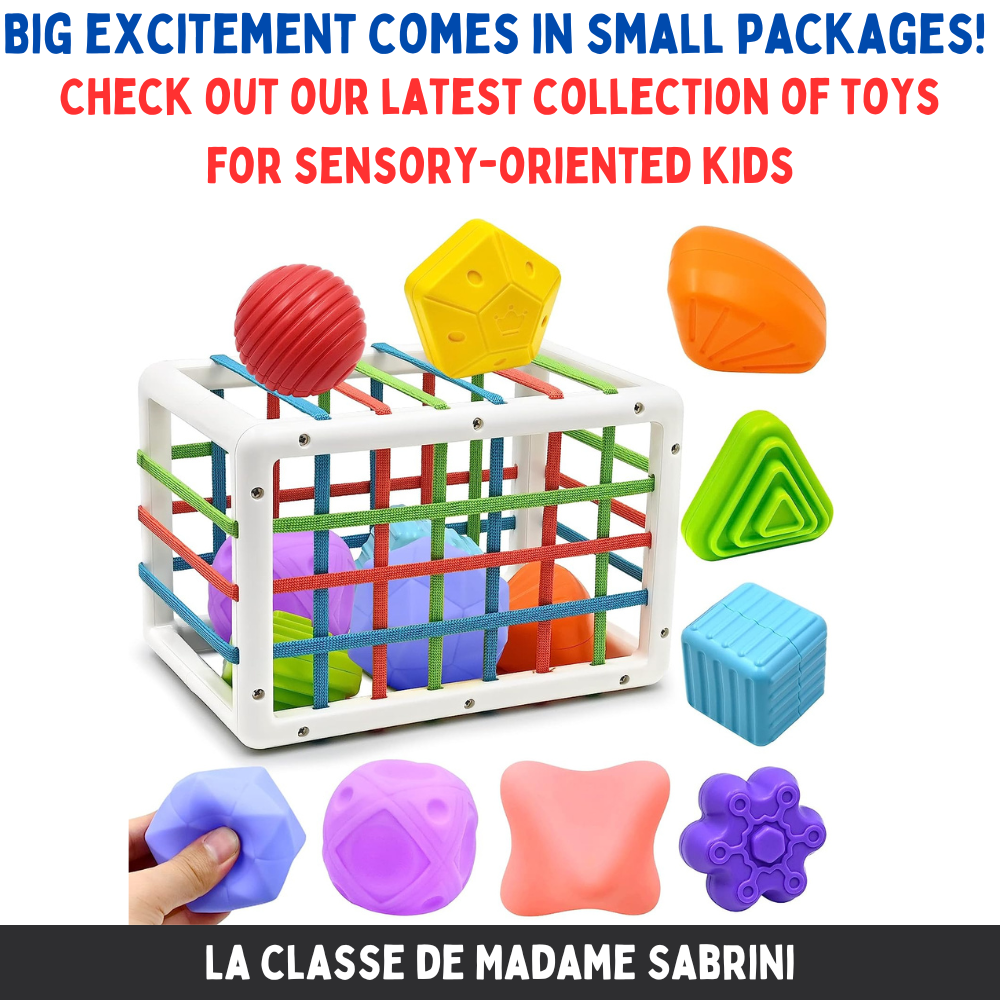
Ideas for Sensory-Oriented Kids: Small But Stimulating Toys

This post may contain affiliate links which means I may receive a commission for purchases made through links. I will only recommend products that I have personally used! Learn more on my Private Policy page. Sensory Items for Kids are an excellent way to provide fun and stimulating activities that will engage and entertain your children. They are small, lightweight, and easy to store, making them ideal for stocking stuffers. If you’re looking for ideas on what sensory items to include in your child’s stocking this year, look no further! We’ve got some great ideas for sensory-oriented toys and activities that your kids are sure to love. From squishy balls to crunchy foam, there are lots of exciting items to choose from! Why sensory toys are important for kids Sensory Items for Kids are not just fun and entertaining, they also serve an important purpose for children’s development. Sensory toys provide a unique way for children to engage and explore their environment through touch, sound, sight, taste, and smell. These toys stimulate the senses and encourage children to experiment and discover their world in a safe and fun way. Sensory toys also help children develop important skills such as fine motor skills, hand-eye coordination, and problem-solving. As such, Sensory Items for Kids are highly recommended for children of all ages, and make great Stocking Stuffer Ideas for Kids during the holiday season. So if you’re looking for small but stimulating toys for your child’s stocking this year, consider stocking up on sensory toys. Your child’s senses (and brain) will thank you! Types of sensory items There are a variety of sensory items that can help engage and stimulate a child’s senses. Sensory items for kids come in all shapes, sizes, and textures, making them perfect stocking stuffer ideas for kids this holiday season. Here are a few types of sensory items to consider: 1. Fidget toys: These are small, handheld toys that allow children to move their hands and fingers, providing a calming and focusing effect. Examples of fidget toys include stress balls, fidget spinners, and squishy toys. 2. Sensory balls: These come in a range of textures and sizes, from bumpy to squishy. They can help children develop fine motor skills and coordination, as well as provide a soothing sensation when squeezed. 3. Playdough or clay: Manipulating playdough or clay can be therapeutic for children, allowing them to create and experiment with different shapes and textures. 4. Sensory bottles: These are clear plastic bottles filled with water, glitter, and other materials that can create a mesmerizing effect when shaken. Sensory bottles can provide a calming visual distraction for children. 5. Textured toys: Toys with different textures can help develop a child’s sense of touch. Examples include soft plush toys, rough wooden toys, and smooth plastic toys. Remember, when choosing sensory items for kids, it’s important to consider your child’s individual needs and preferences. Every child has their own unique sensory preferences, so try a variety of items to see what works best for them. Additionally, if you have the time and materials, DIY sensory toys can be a fun and affordable option.   Top stocking stuffer ideas for sensory-oriented kids If you’re on the hunt for stocking stuffer ideas for kids who are sensory-oriented, look no further. Here are our top picks for small but stimulating toys: 1. Fidget toys – These come in many forms, from small spinners to squishy balls to cubes with different textures and buttons to push. They can help children who have difficulty staying still or focusing. 2. Kinetic sand or slime – These tactile materials can be manipulated and molded, providing a satisfying sensory experience. They also have a calming effect on some kids. 3. Light-up toys – Whether it’s a small flashlight or a flashing ball, these toys offer visual stimulation and can be soothing for some kids. 4. Scented items – Consider adding scented stickers, markers, or putty to your child’s stocking. The different smells can be calming or invigorating, depending on the scent. 5. Chewable items – Some kids benefit from oral stimulation, and chewable items can be a safe way for them to meet that need. Chewelry (chewable jewelry) or silicone chew toys are good options.   6. Stress balls – Another tactile toy, stress balls can provide a calming outlet for nervous energy or anxiety. 7. Bubble wrap – This classic material is a cheap and satisfying way for kids to experience sensory input. Popping bubbles can be a fun stress-reliever. These are just a few ideas to get you started. You can also find DIY tutorials online for making your own sensory toys with items you have at home. Happy stocking stuffing! DIY sensory toys Creating your own sensory toys can be a fun and cost-effective way to provide your child with the sensory input they need. Here are some simple DIY ideas for Sensory Items for Kids: 1. Sensory bottles: Fill plastic bottles with items like glitter, beads, or small toys. As your child shakes the bottle, they’ll experience a calming, mesmerizing effect. 2. Texture bags: Fill small bags with materials of varying textures, such as cotton balls, sand, or pom-poms. Encourage your child to explore the different textures with their hands. 3. Playdough: Making homemade playdough is easy and can be a great way to provide tactile stimulation for your child. 4. Sensory bins: Fill a plastic bin with materials like rice, beans, or kinetic sand. Add in some small toys or figurines for your child to discover as they dig through the material. 5. Squishy stress balls: Fill balloons with flour, rice, or beans and tie them off. These can provide a satisfying squish and help with stress relief. These DIY Sensory Items for Kids are just a few ideas to get you started. The possibilities are endless, so get creative and have fun! These also make great Stocking Stuffer Ideas for Kids that will keep them entertained and engaged.

Ideas for Sensory-Oriented Kids: Small But Stimulating Toys Read More »

L’ABC du dépistage du TDAH en classe

Ce message peut contenir des liens d’affiliation, ce qui signifie que je peux recevoir une commission pour les achats effectués via des liens. Je ne recommanderai que des produits que j’ai personnellement utilisés ! En savoir plus sur ma page Politique de confidentialité. En tant qu’enseignant, apprendre à repérer le TDAH dans votre classe peut être un défi. Mais avec un peu de connaissances et la bonne approche, vous pouvez créer un environnement adapté aux besoins uniques des étudiants TDAH. Avec l’ABC du dépistage du TDAH en classe, vous apprendrez à reconnaître les signes du trouble déficitaire de l’attention avec hyperactivité et à montrer à vos élèves l’amour et les soins dont ils ont besoin. Qu’est-ce que le TDAH et comment affecte-t-il les enfants en classe ? Le TDAH, ou trouble déficitaire de l’attention avec hyperactivité, est un trouble neurodéveloppemental qui touche environ 6 à 9 % des enfants d’âge scolaire. Les enfants atteints de TDAH ont des difficultés d’attention, d’hyperactivité et d’impulsivité. Ces difficultés peuvent avoir un impact significatif sur leurs performances scolaires et leur comportement en classe.En classe, les élèves atteints de TDAH peuvent avoir du mal à rester concentrés sur les tâches ou les instructions de l’enseignant. Ils peuvent également avoir de la difficulté à rester assis et à rester silencieux pendant les cours. Cela peut perturber l’environnement d’apprentissage de l’élève atteint de TDAH et de ses camarades de classe.Les enseignants peuvent adapter leurs méthodes d’enseignement et l’environnement de la classe pour aider à soutenir les élèves atteints de TDAH. Par exemple, décomposer les instructions en étapes plus petites et fournir des commentaires plus fréquents peut aider à garder les élèves engagés et concentrés sur la tâche. La modification de la disposition des sièges pour réduire les distractions ou la fourniture d’un espace désigné pour les pauses de mouvement peuvent également être des aménagements efficaces.Il est important que les enseignants comprennent que le TDAH est une condition médicale et nécessite un diagnostic et un traitement appropriés. La communication avec les parents et les professionnels de la santé est cruciale pour créer un plan qui répond aux besoins spécifiques de l’élève atteint de TDAH en classe. En travaillant ensemble, les enseignants et le personnel de soutien peuvent offrir le meilleur environnement d’apprentissage possible à tous les élèves. Comportements courants des enfants atteints de TDAH en classe Il peut être difficile de repérer le TDAH en classe, car les symptômes du trouble peuvent parfois être confondus avec le comportement typique d’un enfant. Cependant, il existe quelques comportements courants que les étudiants atteints de TDAH présentent souvent. Ces comportements comprennent la difficulté à prêter attention, l’impulsivité, l’hyperactivité et l’oubli.En classe, un élève atteint de TDAH peut avoir du mal à rester assis et à se concentrer sur une tâche pendant une période prolongée. Ils peuvent être facilement distraits par des stimuli externes, tels que des bruits ou des mouvements autour d’eux. Cela peut rendre difficile pour l’enseignant de garder son attention pendant les cours ou les discussions de groupe.Les étudiants atteints de TDAH peuvent également lutter contre l’impulsivité. Ils peuvent interrompre l’enseignant ou d’autres élèves pendant le cours et avoir de la difficulté à attendre leur tour pour parler ou terminer une tâche. De plus, l’oubli est un symptôme courant du TDAH, et les élèves peuvent oublier des devoirs ou ne pas apporter le matériel nécessaire en classe.Il est important que les enseignants soient conscients de ces comportements afin qu’ils puissent adapter leurs méthodes d’enseignement pour mieux accompagner les élèves atteints de TDAH. Des stratégies telles que fournir des pauses fréquentes, décomposer les devoirs en tâches plus petites et fournir des attentes et des rappels clairs peuvent toutes aider les élèves atteints de TDAH à mieux gérer leurs symptômes en classe. Stratégies pour identifier et suivre les symptômes du TDAH En tant qu’enseignant, il peut être difficile d’identifier les élèves atteints de TDAH en classe. Cependant, il existe plusieurs stratégies que vous pouvez utiliser pour suivre et observer les symptômes du TDAH afin de mieux comprendre et soutenir vos élèves.Premièrement, il est important de créer un environnement d’apprentissage qui peut s’adapter aux besoins de tous les élèves. Cela peut inclure la création d’une routine structurée, la minimisation des distractions et l’offre d’options de sièges flexibles. Lorsque les élèves sont à l’aise et engagés dans leur environnement d’apprentissage, il est plus facile d’observer leur comportement et d’identifier les symptômes potentiels du TDAH.Une autre stratégie efficace consiste à créer un système de suivi des comportements associés au TDAH. Cela peut inclure la tenue d’un journal quotidien de comportements qui perturbent la classe, comme interrompre ou gigoter. Cela peut aider les enseignants et les parents à comprendre les schémas de comportement et à travailler ensemble pour développer des stratégies de gestion des symptômes.De plus, la communication avec les parents et les professionnels de la santé peut être essentielle pour identifier et suivre les symptômes du TDAH. La collaboration avec les parents et les prestataires de soins de santé peut donner un aperçu du comportement d’un enfant et de tout traitement qu’il peut recevoir.Enfin, il est important que les enseignants connaissent les comportements courants associés au TDAH. Cela peut inclure l’inattention, l’impulsivité et l’hyperactivité. Comprendre ces comportements peut aider les enseignants à reconnaître les symptômes et à réagir de manière appropriée pour soutenir leurs élèves.En mettant en œuvre ces stratégies, les enseignants peuvent identifier et suivre plus efficacement les symptômes du TDAH en classe. Cela peut conduire à des interventions et à un soutien plus ciblés pour les étudiants atteints de TDAH, améliorant ainsi leur expérience d’apprentissage globale. Communication avec les parents et les professionnels de santé Une communication efficace entre les enseignants, les parents et les professionnels de la santé est essentielle pour identifier et soutenir les élèves atteints de TDAH en classe. Les parents sont souvent les premiers à remarquer les symptômes du TDAH chez leur enfant et peuvent fournir des informations précieuses sur le comportement de leur enfant à l’intérieur et à l’extérieur de la classe.Il est important que les enseignants aient une communication ouverte et honnête avec les parents au sujet du comportement de leur enfant et de toute préoccupation qu’ils pourraient avoir au sujet du TDAH. Les enseignants peuvent également fournir

L’ABC du dépistage du TDAH en classe Read More »

Scroll to Top